

greek option trading strategies pdf
Options Greeks – Delta, Gamma, Theta, Vega – are vital for sophisticated options trading, measuring price sensitivity and aiding risk management and profit optimization.
What are Options Greeks?
Options Greeks are a set of calculations that quantify the sensitivity of an option’s price to various underlying factors. These factors include the price of the underlying asset, the time to expiration, volatility, and interest rates. Essentially, they provide traders with a deeper understanding of the risks associated with option positions.
The primary Greeks are Delta, Gamma, Theta, and Vega. Delta measures the change in an option’s price for a one-dollar move in the underlying asset. Gamma represents the rate of change of Delta. Theta indicates the time decay of an option’s value, while Vega measures the option’s sensitivity to changes in volatility. Understanding these Greeks is crucial for constructing and managing effective options trading strategies, allowing traders to refine their approach and potentially maximize profits.
The Importance of Greeks in Options Trading
The Greeks are paramount for options traders because they quantify how an option’s value reacts to market shifts. They move beyond simple directional bets, enabling precise risk assessment and portfolio hedging. Without understanding the Greeks, traders are essentially gambling, lacking the tools to manage potential losses effectively.
These calculations allow for the construction of strategies designed to profit from specific market conditions – rising volatility (Vega), time decay (Theta), or directional movements (Delta & Gamma). Furthermore, Greeks facilitate informed strike price and expiration date selection, optimizing potential returns. Ultimately, mastering the Greeks transforms options trading from speculation to a more calculated and controlled endeavor, increasing the probability of consistent profitability.

Delta: Measuring Price Sensitivity
Delta gauges an option’s price change relative to the underlying asset’s movement, informing directional trading choices and strike selection for optimized bets.
Understanding Delta and Directional Trading
Delta is fundamentally about understanding how much an option’s price is expected to move for every $1 change in the underlying asset’s price. A delta of 0.50, for example, suggests the option price will move $0.50 for every $1 move in the underlying. This makes delta crucial for directional trading, where traders aim to profit from anticipated price movements.
Traders use delta to assess the probability of an option finishing in the money. Higher deltas (closer to 1.00 for calls or -1.00 for puts) indicate a higher probability, but also typically come with a higher premium cost. Conversely, lower deltas offer cheaper options but a reduced probability of profit. Selecting the appropriate delta value is therefore a key component of crafting a directional options strategy, aligning the option’s sensitivity with the trader’s market outlook and risk tolerance. Optimizing strike selection relies heavily on this understanding.
Delta-Neutral Strategies
Delta-neutral strategies aim to construct a portfolio where the overall delta is zero, meaning the portfolio’s value is theoretically insensitive to small movements in the underlying asset’s price. This is achieved by combining long and short option positions, or options and the underlying asset itself, in specific ratios.
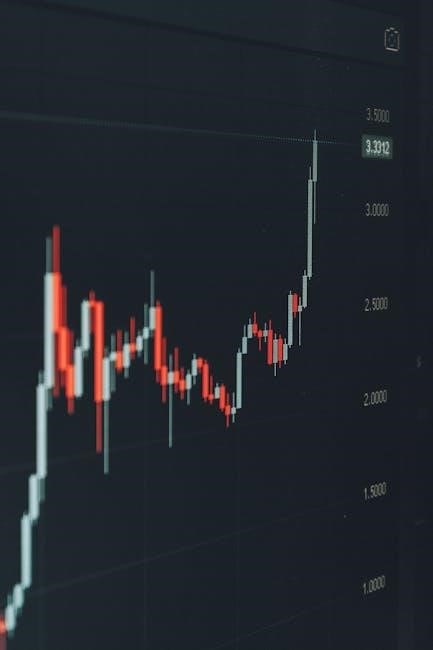
A common example is a straddle or strangle, where equal amounts of calls and puts with the same expiration date are held. While not perfectly delta-neutral due to gamma (the rate of delta change), these strategies profit from significant price swings in either direction. Delta-neutrality isn’t about predicting direction; it’s about profiting from volatility or time decay while minimizing directional risk; Maintaining delta-neutrality often requires dynamic hedging, continuously adjusting positions as the underlying price changes and delta shifts.
Using Delta to Optimize Strike Selection
Delta plays a crucial role in selecting the appropriate strike price for options trades, aligning with a trader’s directional outlook and risk tolerance. A higher delta indicates a greater sensitivity to the underlying asset’s price, suitable for traders expecting substantial movement. Conversely, lower deltas are preferred when anticipating smaller price changes or seeking a more conservative approach.
Optimizing strike selection involves balancing delta with other Greeks like gamma. Higher gamma strikes offer greater potential profit but also increased risk. Traders can use delta to estimate the probability of an option finishing in the money. Understanding the delta-strike relationship allows for precise position sizing and profit target setting, maximizing potential returns while managing exposure.

Gamma: The Rate of Delta Change
Gamma measures the rate of change in an option’s delta, revealing how quickly delta will shift with movements in the underlying asset’s price.
Gamma and its Impact on Delta
Gamma directly influences delta, dictating the speed at which delta changes as the underlying asset’s price fluctuates. A higher gamma signifies a more rapid delta shift, meaning the option’s directional exposure will adjust quickly. Conversely, lower gamma implies a slower delta change, offering more stable directional exposure.
Understanding this relationship is crucial for traders employing delta-neutral strategies. Because delta isn’t static, positions must be dynamically adjusted to maintain neutrality as the underlying price moves. Gamma dictates how frequently these adjustments are needed. High-gamma positions require more frequent rebalancing to stay delta-neutral, while low-gamma positions offer greater stability but potentially less profit from significant price swings.
Essentially, gamma represents the ‘acceleration’ of delta, and traders must account for this acceleration when managing risk and optimizing their strategies. Ignoring gamma can lead to unexpected delta exposure and potentially substantial losses.
Managing Gamma Risk
Managing gamma risk is paramount, especially for short option positions which have positive gamma – meaning delta increases as the underlying moves favorably, and accelerates losses if it moves against you. Strategies to mitigate this include gamma hedging, involving buying or selling options to offset the existing gamma exposure. Frequent rebalancing is often necessary, particularly with high-gamma positions, to maintain a desired delta level.
Another approach is to utilize gamma scalping, profiting from small price movements while continuously adjusting the position. However, this requires active management and can incur transaction costs. Understanding the time decay (theta) component is also vital, as gamma risk diminishes as the option approaches expiration.
Ultimately, effective gamma risk management requires a thorough understanding of the Greeks, diligent monitoring of the position, and a proactive approach to adjusting the strategy based on market conditions.
Gamma Scalping Strategies
Gamma scalping capitalizes on the accelerating delta changes near expiration, aiming to profit from small price movements. This involves continuously adjusting the underlying asset position to maintain delta neutrality as the option’s delta shifts rapidly. It’s a high-frequency trading approach demanding quick execution and low transaction costs.
A common strategy involves selling an at-the-money straddle or strangle, then dynamically hedging the delta as the underlying price fluctuates. The profit comes from the premium received, offset by the costs of rebalancing the hedge. Successful gamma scalping requires precise timing and a robust trading system.
However, it’s a complex strategy prone to slippage and commission fees, making it suitable for experienced traders with access to advanced trading platforms and real-time data feeds. Careful risk management is crucial, as even small adverse movements can quickly erode profits.
Theta: Time Decay Explained
Theta measures an option’s sensitivity to time, indicating how much value it loses each day as expiration nears, impacting options pricing significantly.
Theta’s Role in Options Pricing
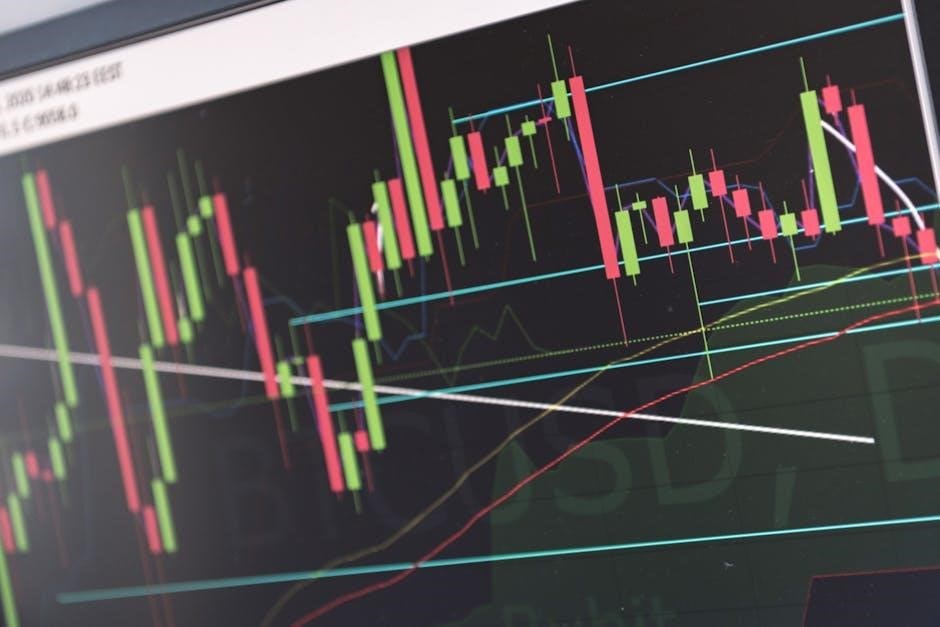
Theta, often referred to as “time decay,” plays a crucial role in determining an option’s price, particularly as the expiration date approaches. It quantifies the rate at which an option loses value with each passing day, assuming all other factors remain constant. This decay isn’t linear; it accelerates as the expiration nears, meaning the loss of value increases exponentially in the final weeks and days.
For option sellers, theta is a positive factor, as time decay works in their favor, allowing them to profit as the option’s value diminishes. Conversely, for option buyers, theta is a negative factor, eroding the value of their investment over time. Understanding theta is paramount when constructing strategies like selling option spreads, where the goal is to capitalize on time decay.
The magnitude of theta is influenced by factors like the option’s moneyness and time to expiration; at-the-money options generally exhibit higher theta values than deep in-the-money or out-of-the-money options; Traders actively monitor theta to assess the impact of time on their positions and adjust their strategies accordingly.
Theta-Based Strategies (Selling Options)
Theta-based strategies center around profiting from the time decay of options, primarily achieved through selling options – a strategy where traders receive a premium for taking on the obligation to buy or sell an asset at a predetermined price. Common approaches include selling covered calls (owning the underlying asset and selling call options) and cash-secured puts (selling put options with sufficient cash to cover potential purchase).
These strategies benefit from theta as the option’s value erodes over time, allowing the seller to keep the premium. However, they carry the risk of significant losses if the underlying asset moves against the seller’s position.
Spreads, like credit spreads, are also theta-based, involving selling one option and buying another with a different strike price to limit risk. Successful implementation requires careful consideration of risk tolerance and market outlook, aiming for a high probability of profit through time decay.
Maximizing Theta Profit
To maximize theta profit, options sellers should focus on strategies that benefit most from rapid time decay. Selling options closer to expiration yields higher theta, but also increases delta risk. Therefore, a balance is crucial. Choosing options with a lower probability of being in-the-money at expiration enhances the likelihood of retaining the premium.
Implementing strategies like short strangles or straddles can capitalize on theta, but require a neutral market outlook and careful risk management. Regularly monitoring the underlying asset’s price and adjusting positions as needed is essential.
Furthermore, understanding implied volatility’s impact on theta is vital; lower volatility generally leads to faster time decay. Combining theta strategies with other Greeks, like delta, can create more robust and adaptable trading plans.

Vega: Volatility Sensitivity
Vega measures an option’s price sensitivity to changes in implied volatility; volatility trading centers around vega, utilizing strategies to profit from volatility shifts.
Understanding Vega and Volatility
Vega quantifies the rate of change in an option’s price given a one percent change in implied volatility. It’s crucial to understand that Vega isn’t directional; it doesn’t indicate whether volatility will rise or fall, only how much the option price will be affected if it does. Higher Vega values signify greater sensitivity to volatility fluctuations, making those options more expensive.
Implied volatility, a key component of Vega, represents the market’s expectation of future price swings. It’s derived from option prices themselves, rather than historical data. Traders often employ volatility trading strategies, focusing solely on Vega, aiming to profit from anticipated increases or decreases in volatility, irrespective of the underlying asset’s direction. Resources like Euan Sinclair’s “Volatility Trading” provide in-depth knowledge on this subject.
Understanding Vega is paramount when utilizing options pricing models, as volatility is a primary input. Accurately assessing and predicting volatility changes is essential for successful options trading.
Volatility Trading Strategies
Volatility trading centers around profiting from anticipated changes in implied volatility, often independent of the underlying asset’s price movement. Strategies include straddles and strangles, which benefit from significant price swings in either direction. A straddle involves buying a call and a put with the same strike price and expiration date, while a strangle uses out-of-the-money options.
These strategies are employed when a large price movement is expected, but the direction is uncertain. Conversely, traders can implement strategies like short straddles or strangles to profit from stable markets and declining volatility. Euan Sinclair’s work emphasizes the importance of understanding volatility surfaces and term structure when constructing these trades.
Successfully executing volatility trades requires careful analysis of volatility skew and kurtosis, alongside a solid grasp of Vega and its implications.

Vega and Options Pricing Models
Vega quantifies an option’s sensitivity to changes in implied volatility; Higher Vega values indicate greater price fluctuation with volatility shifts, crucial for volatility-focused strategies. Options pricing models, like Black-Scholes, incorporate volatility as a key input; therefore, Vega directly impacts the calculated option price.
Understanding this relationship is paramount. An increase in implied volatility boosts call and put option prices (positive Vega), while a decrease lowers them (negative Vega). Traders utilize Vega to assess the potential profit or loss from volatility expansions or contractions.
Sinclair’s books detail how to interpret volatility surfaces and their impact on Vega, enabling more precise option valuation and trade construction. Accurate modeling of volatility is essential for effective risk management and maximizing potential returns.
Combining Greeks for Advanced Strategies
Advanced traders blend Delta, Gamma, Theta, and Vega to construct strategies capitalizing on multiple factors, enhancing risk management and potential profitability.
Delta-Gamma Strategies
Delta-Gamma strategies aim to exploit the relationship between an option’s directional exposure (Delta) and the rate of change of that exposure (Gamma). A core concept involves dynamically hedging a position to maintain Delta neutrality. As the underlying asset’s price moves, Gamma causes Delta to shift, necessitating adjustments to the hedge – typically buying or selling the underlying asset.
Traders utilize these strategies to profit from significant price movements, anticipating substantial Gamma effects. For instance, a straddle or strangle, possessing high Gamma, benefits from large swings in either direction. However, managing Gamma risk is crucial, as rapid Delta changes can lead to substantial losses if not actively monitored and adjusted. These strategies often involve frequent trading to rebalance the Delta exposure, incurring transaction costs that must be factored into profitability calculations.
Theta-Vega Strategies
Theta-Vega strategies center around exploiting the interplay between time decay (Theta) and volatility (Vega). These approaches often involve selling options, benefiting from Theta as time passes and the option’s value erodes. Simultaneously, traders consider Vega, recognizing that changes in implied volatility can significantly impact option prices. A key tactic is to structure positions that are long Vega when anticipating a volatility increase, or short Vega when expecting volatility to decline.
Combining these Greeks requires careful consideration of market conditions. For example, selling options during periods of stable or decreasing volatility maximizes Theta profit while minimizing Vega risk. Conversely, purchasing options or utilizing volatility-sensitive spreads can capitalize on anticipated volatility spikes. Successful Theta-Vega strategies demand diligent monitoring of both time decay and volatility fluctuations.
Risk Management with Multiple Greeks
Effective risk management when employing multiple Greeks—Delta, Gamma, Theta, and Vega—demands a holistic view of potential exposures. Simply optimizing for one Greek can inadvertently create vulnerabilities in others. For instance, a Delta-neutral strategy might be highly sensitive to Gamma, requiring frequent adjustments as the underlying asset’s price moves. Monitoring Gamma is crucial to prevent significant Delta shifts.
Furthermore, understanding the correlation between Greeks is paramount. A position long Gamma might benefit from increased volatility (Vega), but also experience accelerated time decay (Theta). Regularly assessing the overall Greek profile—the combined effect of all Greeks—provides a comprehensive risk assessment. Stress-testing scenarios, simulating various market movements, helps identify potential weaknesses and refine position sizing for robust risk control.

Resources for Further Learning
Explore books by Dan Pasarelli and Euan Sinclair, alongside online tools and active communities, to deepen your understanding of options Greeks.

Recommended Books on Options Greeks
For a comprehensive understanding of options Greeks, several books stand out as essential resources for both novice and experienced traders. Dan Pasarelli’s “Trading Options Greeks, Second Edition” is highly recommended, offering fresh insights into option trading and valuation with a straightforward, accessible style. This book skillfully demonstrates how to utilize the Greeks – Delta, Gamma, Theta, and Vega – to construct strategies that capitalize on volatility, time decay, or interest rate fluctuations.
Furthermore, Euan Sinclair’s works are invaluable. “Volatility Trading” delves deeply into strategies centered around Vega, while “Positional Option Trading” provides a broader perspective on incorporating Greeks into overall portfolio management. These texts equip traders with the knowledge to optimize directional bets by carefully selecting strike prices and expiration dates based on Delta and Gamma values. They also illuminate the nuances of selling options spreads, a strategy heavily reliant on Theta, and managing the associated risks.
Online Tools and Screeners for Greek Analysis
Numerous online tools and screeners empower options traders to analyze Greeks efficiently and refine their strategies. Barchart’s Option Screener is a powerful resource, allowing users to explore options contracts based on specific Greek values. This functionality is particularly useful when a trader doesn’t have a pre-defined underlying asset but seeks opportunities aligned with a particular strategy, such as a high-Theta play or a volatility-focused approach.
Beyond dedicated screeners, many brokerage platforms integrate Greek calculations directly into their options chains, providing real-time data on Delta, Gamma, Theta, and Vega for each contract. These platforms often offer visual representations of Greek sensitivities, aiding in quick assessment. Utilizing these tools allows traders to quickly identify contracts exhibiting desired characteristics, facilitating informed decision-making and optimized risk management. Remember to cross-reference data and understand the limitations of any single tool.
Communities and Forums for Options Traders
Engaging with online communities and forums dedicated to options trading provides invaluable opportunities for learning and knowledge sharing. Platforms like Reddit host specialized subreddits – such as “thetagang” and “vegagang” – catering to traders focused on specific Greeks and strategies. These communities foster discussions on market analysis, trade ideas, and risk management techniques.
Participating in these forums allows traders to learn from experienced peers, gain diverse perspectives, and refine their understanding of complex concepts. It’s crucial to approach information with a critical mindset, verifying insights and conducting independent research. Beyond Reddit, dedicated options trading forums and websites offer educational resources, webinars, and networking opportunities. Active participation can significantly accelerate learning and improve trading performance, but always prioritize responsible risk management.