

teaching english to beginners material pdf
Beginner learners thrive with accessible materials; numerous free English PDF lessons are available online, covering vocabulary, verbs, and essential phrases for initial fluency.
Target Audience & Learning Goals
This introductory course is designed for absolute beginners with little to no prior English language experience. The target audience includes young learners, adult immigrants, and anyone seeking foundational English skills. Learning goals center around building a basic communicative competence – enabling students to understand and use everyday expressions and simple phrases.
Specifically, students will learn to introduce themselves, ask and answer simple questions, and comprehend basic instructions. Utilizing readily available PDF resources, we aim to establish a strong foundation in pronunciation, vocabulary, and fundamental grammar. Success is measured by the ability to participate in simple conversations and demonstrate comprehension of core concepts, fostering confidence in their initial English journey.
Importance of Visual Aids & Mime
When teaching English to beginners, especially those with limited literacy in their native language, visual aids and mime are absolutely crucial. Relying solely on verbal instruction can be overwhelming; images, flashcards, and realia provide concrete references for new vocabulary and concepts. Mime, or physical demonstration, bypasses language barriers entirely, effectively conveying meaning and reinforcing understanding.
These techniques are particularly valuable when utilizing PDF-based learning materials. Supplementing PDF exercises with visual cues and actions transforms abstract words into tangible experiences. Don’t worry about perfection; focus on conveying basic meaning through body language. Encourage students to respond physically, creating an engaging and memorable learning environment, even if their spoken English is still developing.

Essential Beginner English Topics
PDF resources should prioritize core topics: greetings, numbers, the alphabet, colors, and shapes, building a foundational vocabulary for beginner English learners.
PDF materials for greetings should focus on “Hello,” “Goodbye,” “Good morning/afternoon/evening,” and “How are you?” Introduce simple responses like “I’m fine, thank you.” Visual aids are crucial; pairing images with phrases reinforces understanding for beginners.
Role-playing is incredibly effective. PDF worksheets can include fill-in-the-blank dialogues: “Hello, my name is ____.” and “Nice to meet you.” Emphasize pronunciation and encourage repetition.
Mime and movement are essential, especially when students struggle with verbalization. Don’t push perfect grammar initially; focus on conveying basic meaning. Free PDF resources often provide these foundational dialogues, making lesson preparation easier for educators.
Numbers and the Alphabet
PDF resources for numbers should start with 1-10, utilizing visual representations like counting objects. Alphabet PDFs should pair uppercase and lowercase letters with corresponding images (A for Apple, B for Ball). Pronunciation is key; many free PDFs include audio links or phonetic transcriptions.
Games are effective: number matching, alphabet tracing, and simple spelling exercises found in downloadable worksheets. Focus on recognition before writing.
Beginners benefit from repetition and multi-sensory learning. Worksheets can include coloring activities and simple counting tasks. Remember, understanding basic numbers and the alphabet forms the foundation for reading and writing skills, readily available through free PDF materials.
Colors and Shapes
PDF resources for colors should showcase vibrant images alongside the color name (Red – Apple, Blue – Sky). Shape PDFs should present basic forms – circle, square, triangle – with clear outlines and real-world examples. Combining colors and shapes (a red circle, a blue square) enhances learning.
Interactive PDF worksheets can include coloring activities (“Color the circle red”) and matching exercises. Flashcards, often available as PDF downloads, are excellent for quick recall.
Focus on simple instructions and repetition. Games like “I Spy” using colors and shapes are engaging. Free downloadable PDFs provide a wealth of visual aids and practice opportunities, making learning fun and accessible for beginners.

Grammar Fundamentals for Beginners
PDF grammar worksheets focusing on subject-verb agreement, singular/plural nouns, and basic pronouns (I, you, he, she, it) are crucial starting points.
Subject-Verb Agreement (Basic Concepts)
Introducing subject-verb agreement to beginners requires a gentle approach, utilizing visual aids and repetitive exercises. PDF resources often present simple sentences with fill-in-the-blank activities, focusing on “is” and “are” with singular and plural subjects.
Emphasize that “news” is a singular noun, despite its appearance. Begin with basic statements like “I can play basketball” and contrast them with negatives (“I cannot play basketball”).
Explain the contraction “can’t” and the role of the apostrophe, providing PDF worksheets dedicated to contraction practice. Beginner PDFs should prioritize understanding over perfect grammatical accuracy, encouraging students to communicate even with minor errors.
Singular vs. Plural Nouns
Teaching singular and plural nouns to beginners benefits greatly from visual PDF resources. These materials often showcase images paired with both the singular and plural forms of nouns – “one apple,” “many apples.” Focus initially on regular pluralization (adding ‘s’), then introduce irregular plurals gradually.
PDF worksheets can include matching exercises, where students connect singular nouns to their plural counterparts.
Emphasize the concept of “one” versus “more than one.” Beginner-level PDFs should avoid complex exceptions initially, prioritizing a solid foundation in regular plural formation. Encourage students to practice identifying and using both forms in simple sentences, reinforcing the core concept.

Introducing pronouns requires clear, visual PDF materials. Charts displaying “I,” “You,” “He,” “She,” and “It” alongside corresponding images are incredibly helpful for beginners. PDF worksheets should focus on simple substitution exercises – replacing nouns with appropriate pronouns in basic sentences.
Begin with “I” and “You” as they are easily relatable. Then, introduce “He” and “She” with clear gender associations. “It” can be presented with inanimate objects.
PDF resources should emphasize pronoun usage in context, avoiding complex grammatical explanations initially. Focus on practical application through fill-in-the-blank exercises and sentence building.

Practical English Skills
PDF resources focusing on daily routines, contractions, and question formation are vital; downloadable worksheets provide structured practice for beginner conversational abilities.
Simple Present Tense for Daily Routines
Introducing the simple present tense is crucial for beginners, enabling them to discuss everyday activities. PDF worksheets and lesson plans often center around this concept, utilizing visual aids to depict common routines like waking up, eating breakfast, or going to school.
Focus on sentence structure: Subject + Verb (base form). For example, “I wake up at 7 am.” Emphasize the third-person singular (he/she/it) requiring an ‘s’ – “He wakes up at 8 am.”
Numerous free PDF resources provide exercises where students fill in the blanks or create sentences describing their own daily schedules. Encourage repetition and practice to solidify understanding. Contractions (I wake up = I wake up) can be introduced alongside, with PDF materials often including dedicated practice sections.

Contractions and Apostrophe Usage
Contractions, like “can’t” for “cannot,” are frequently used in spoken English and should be introduced early. Many beginner English PDF resources dedicate sections to this topic, explaining how an apostrophe replaces missing letters.
Begin by demonstrating common contractions: I’m, you’re, he’s, she’s, it’s, we’re, they’re. Explain that the apostrophe indicates where letters have been removed.
PDF worksheets often include exercises where students expand contractions (can’t -> cannot) or create contractions from full forms. Highlight the difference between possessive ‘s (John’s book) and contractions. Homework assignments, readily available as PDFs, frequently ask students to write their own sentences using contractions, reinforcing the concept.
Asking and Answering Basic Questions
Developing question-forming skills is crucial for beginner English learners. Many English PDF lesson plans focus on simple question structures using “Who,” “What,” “Where,” “When,” “Why,” and “How.” These PDFs often present questions alongside visual cues to aid comprehension.
Start with basic questions like “What is your name?” and “How are you?” Encourage students to respond with short, simple answers. PDF resources frequently include role-playing scenarios where students practice asking and answering questions in pairs.
Worksheets available as PDF downloads provide fill-in-the-blank exercises and matching activities to reinforce question formation and appropriate responses. Emphasize correct word order and pronunciation.

Resources & Materials (PDF Focus)
Numerous free English PDF resources exist for beginners, including vocabulary lists, grammar worksheets, and complete lesson plans readily available for download.
Free Beginner English Lesson PDFs
Accessing free Beginner English Lesson PDFs is incredibly beneficial for both educators and students. Websites like PDF-Language-Lessons offer a diverse collection tailored for initial language acquisition. These PDFs commonly cover fundamental vocabulary – adjectives, verbs, and useful phrases – designed to build a solid foundation.
Many resources prioritize practical application, focusing on everyday communication. You can discover downloadable lesson plans covering basic introductions, simple questions, and essential grammar points. Furthermore, several platforms provide comprehensive ESL lesson plans, often categorized by skill level and topic, requiring no registration for immediate access. These materials are invaluable for supplementing classroom instruction or facilitating self-study;
Vocabulary PDF Resources
Dedicated Vocabulary PDF resources are crucial for beginner English learners, providing focused practice on essential words. Many free PDFs categorize vocabulary thematically – for example, colors, shapes, family members, or common objects. These resources often include visual aids, like pictures, to reinforce understanding and memory retention.
PDF-Language-Lessons specifically highlights vocabulary-focused PDFs, alongside resources for adjectives and verbs. These downloadable materials frequently incorporate exercises like matching, fill-in-the-blanks, and simple sentence construction to actively engage learners. Utilizing these PDFs allows students to build a practical lexicon, enabling them to participate in basic conversations and comprehend simple texts effectively.
Grammar PDF Worksheets
Grammar PDF worksheets are invaluable tools for solidifying foundational English grammar concepts with beginners. These resources typically focus on core areas like subject-verb agreement, singular and plural nouns, and the introduction of pronouns (I, you, he, she, it). Worksheets often present grammar rules with clear explanations and numerous practice exercises.
Many free downloadable PDFs offer targeted practice, allowing students to reinforce their understanding through repetition. The availability of answer keys is also a significant benefit, enabling self-assessment and independent learning. Resources often include varied exercise types, such as sentence completion, error correction, and sentence creation, catering to different learning styles and promoting comprehensive grammar mastery.

Lesson Planning & Implementation
Effective implementation involves reviewing prior homework, introducing new topics like the four seasons, and assigning sentence creation tasks for practice.
Reviewing Previous Homework
Begin each session by revisiting the previous day’s assignments. This reinforces learning and identifies areas needing clarification for beginner English students. Focus on practical application; for example, if contractions were taught, ask students to share their created sentences.
Correct errors gently, emphasizing understanding over perfect grammar initially. Mime and movement can aid comprehension during review. Utilize readily available PDF resources to quickly assess comprehension. A quick oral review, asking students to recall key vocabulary or sentence structures, is also beneficial. Remember, consistent review builds confidence and solidifies foundational skills.
Introducing the Four Seasons (as a topic)
Introducing the Four Seasons
Present the four seasons – Spring, Summer, Autumn (Fall), and Winter – using vibrant visuals from readily available PDF resources. Begin by asking simple questions: “What season is it now?” or “What do you wear in Winter?”. Encourage students to describe each season with basic adjectives like “hot,” “cold,” “warm,” and “cool.”
Mime actions associated with each season (e.g., pretending to swim in Summer, rake leaves in Autumn). Incorporate seasonal vocabulary – flowers, sun, snow, leaves – utilizing PDF vocabulary lists. Keep it interactive; ask students to draw their favorite season. This topic lends itself well to simple sentence construction: “I like Summer!”
Homework Assignments (Sentence Creation)
Assign homework focused on sentence creation, reinforcing grammar points and vocabulary learned. A practical exercise is using contractions; students write 5-10 sentences utilizing “can’t” and “I’m,” practicing apostrophe usage. Provide a PDF worksheet with example sentences for guidance.
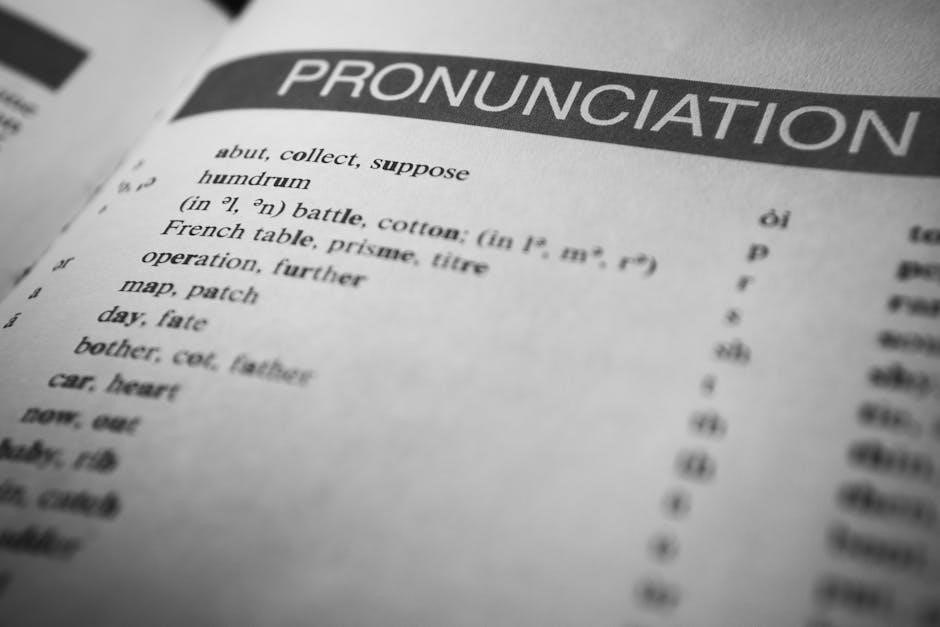
Alternatively, based on the ‘Four Seasons’ lesson, ask students to write sentences like “I like Summer” or “It is cold in Winter.” Encourage creativity, but emphasize correct subject-verb agreement. Reviewing previous homework is crucial; dedicate class time to correcting errors and praising effort. PDF grammar resources can supplement this, offering additional practice.

Assessment & Progress Tracking
Evaluate progress through simple oral assessments and worksheet-based evaluations, utilizing PDF resources for structured testing and clear documentation of student learning.
Simple Oral Assessments
Oral assessments for beginner English learners should prioritize communicative competence over grammatical perfection. Focus on gauging understanding and encouraging attempts at speaking, even with errors. Utilize readily available PDF resources containing basic question prompts – “What is your name?”, “How are you?” – to initiate conversations.
Assess pronunciation and comprehension by asking students to identify colors or shapes presented in PDF worksheets. Encourage repetition and provide positive reinforcement. Keep interactions brief and supportive, creating a low-pressure environment. Remember, the goal is to build confidence and foster a willingness to communicate, not to pinpoint every mistake. Simple role-playing scenarios, guided by PDF dialogues, can also be effective.
Worksheet-Based Evaluation
Leverage the abundance of free English PDF worksheets for evaluating beginner progress. Focus on tasks assessing foundational skills: matching vocabulary to images, filling in missing letters in simple words, and identifying correct spellings. Utilize PDF grammar exercises concentrating on subject-verb agreement and singular/plural nouns.
Worksheets provide a tangible record of student performance and allow for individualized feedback. Design assessments that align directly with previously taught concepts, utilizing vocabulary and structures from PDF lesson materials. Keep worksheets concise and visually appealing to maintain engagement. Remember to provide clear instructions and offer assistance as needed, ensuring the evaluation process is supportive and reinforces learning.